
AI's biggest productivity gains tend to come from tasks that are frequent, information-heavy, and repetitive. Across studies and real-world deployments, the largest improvements often appear in these areas:
Writing and communication
Drafting emails, reports, proposals, and documentation.
Summarizing long documents or meetings.
Rewriting text for different audiences or tones.
Typical gains: 20–60% faster, with especially large benefits for less-experienced writers.
Software development
Generating boilerplate code.
Explaining unfamiliar code.
Writing unit tests.
Debugging common issues.
Developers often complete routine coding tasks significantly faster, though careful review remains important.
Customer support
Drafting responses to common questions.
Retrieving relevant knowledge base articles.
Summarizing customer histories.
Organizations frequently report shorter response times and more consistent service.
Research and information synthesis
Gathering information from multiple sources.
Producing literature reviews or market summaries.
Extracting key insights from lengthy reports.
This reduces time spent searching and organizing information.
Data analysis
Writing SQL queries.
Cleaning datasets.
Explaining charts and trends.
Creating first drafts of analyses and dashboards.
Administrative work
Scheduling and planning.
Generating meeting agendas.
Taking notes and creating action items.
Filling out standard forms and documentation.
Education and learning
Personalized tutoring.
Creating quizzes and study guides.
Explaining difficult concepts at different levels.
Helping learners practice with immediate feedback.
Creative ideation
Brainstorming product ideas.
Marketing campaign concepts.
Naming, slogans, and content outlines.
While humans still make the final creative decisions, AI accelerates exploration of possibilities.
Where AI delivers the highest return
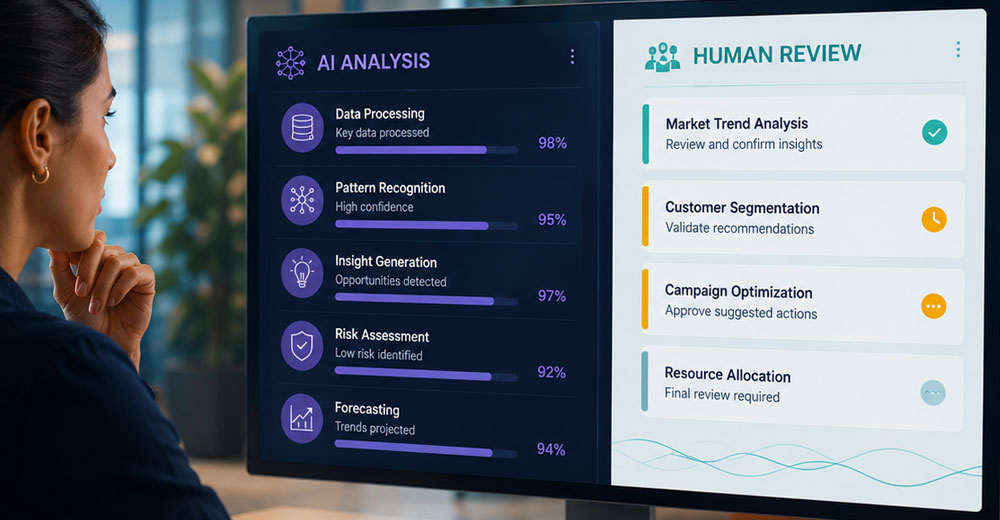
The greatest productivity improvements usually occur when AI acts as a copilot rather than a replacement. High-impact workflows typically follow this pattern:
AI produces a strong first draft.
The human reviews, edits, and adds judgment.
AI handles revisions and formatting.
This combination often saves substantial time while maintaining quality.
Where gains are smaller
AI tends to be less effective for work that depends heavily on:
Strategic decision-making.
Complex negotiations.
Novel scientific discoveries.
Leadership and people management.
Situations requiring deep domain expertise or accountability.
In these cases, AI is better suited as a support tool than a decision-maker.
Overall, the biggest productivity gains come from reducing the time spent on routine cognitive work—drafting, summarizing, searching, coding, and organizing—so people can focus more on analysis, creativity, and decision-making.